Will the Midterms Actually Slow Trump Down?
Why losing the House may matter less than it looks for the president’s agenda

As the November midterm elections approach, the usual question is back on the table. If voters flip control of Congress, does the president lose momentum?
In the case of Donald Trump, the answer appears to be no. Even if Republicans lose their narrow majority in the House of Representatives, the practical limits on Trump’s agenda may be smaller than many assume.
That conclusion rests less on electoral math than on the administrative blueprint established over the last twelve months.
Executive Power Has Done Most of the Work
Much of Trump’s policy record this term has not depended on Congress. The Day One tariff proclamations and the mass-deportation logistical framework have been mainly driven by executive action rather than legislation.
That distinction matters. A Democratic-controlled House can slow bills. It cannot easily unwind executive orders or block presidential authority in areas where Congress was never central to begin with.
As a result, a shift in House control would be more symbolic than decisive when it comes to the president’s core priorities.
From the January 1st expansion of the travel ban to the immigrant visa pause for 75 'high-risk' nations, which took effect on January 21st, the White House has shown it doesn't need a legislative vehicle to move the goalposts.
What a Democratic House Could and Could Not Do
If the Democrats regain power, they will most likely start investigating people. There will be subpoenas, oversight hearings, and various efforts to impeach. While the House can launch the ship of impeachment, the Senate remains the only port where it can actually dock — and that remains firmly in GOP hands.
The House might add pressure, but it no longer has the gears to stop the machine. Even beyond the House floor, the legal architecture of Washington remains heavily weighted toward the executive.
Structural Limits Still Favor the White House
Even in the unlikely scenario where Democrats gained control of both chambers, their ability to block the president would remain limited.
Overriding a veto requires supermajorities that are not in reach. Ending the filibuster would require internal consensus that Democrats do not have. In practice, that means Trump would retain wide latitude on immigration, trade, and foreign policy regardless of the election outcome.
Congress could delay. It could not easily stop him.
Looking at the Numbers
So, what’s causing some panic? The anxiety within the GOP stems from a House majority that is currently on a knife-edge. With a 218–213 split and four seats vacant, Republicans have no room for error. While generic ballots give Democrats a five-point lead, that margin is offset by the "incumbency firewall" in the 14 crossover districts Trump carried by double digits in 2024.
The Senate is still a different world. Despite defending more seats this cycle, the GOP’s structural advantage is formidable. The "Blue Path" to a majority requires Democrats to flip deep-red territory in the special elections to fill the seats of Vice President Vance and Secretary of State Rubio—a tall order given that the Moody (FL) and Husted (OH) appointments keep the GOP's 53-47 edge intact.
Fiscal Politics Heading Into the Vote
The focus has shifted from pandemic-era spending to the immediate reality of this morning's partial government shutdown. With the Senate failing to clear the remaining six appropriations bills before the midnight deadline, the capital is navigating its second funding lapse of the fiscal year, following last autumn’s record-breaking 43-day impasse.
The debate is no longer about temporary stimulus, but about leveraging the $600 billion quarterly deficit to justify a massive overhaul of health care and housing costs, while attempting to lock in the permanent tax cuts established by the One Big Beautiful Bill Act (P.L. 119-21) — the center-of-gravity for the Trump second-term agenda — before the November midterms.
The Institutional Firewall
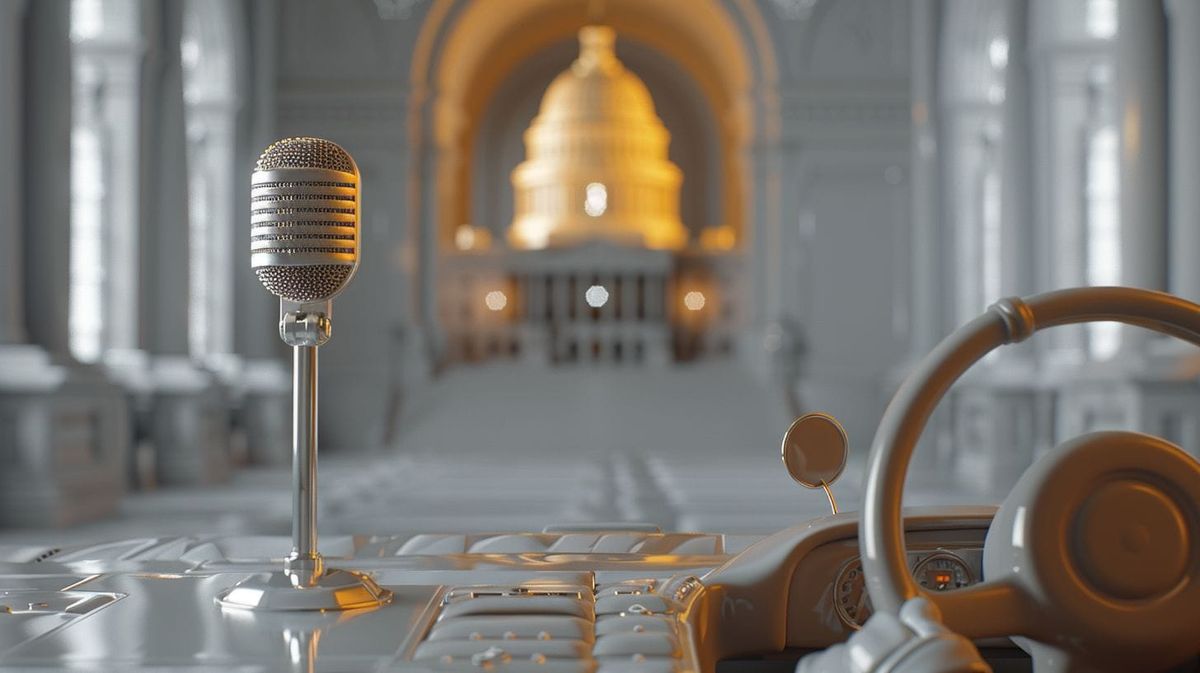
The 2026 midterms will certainly amplify the political noise in the capital. But between the 'pen and the phone' of executive authority and the structural firewall of the Senate, the policy momentum established in 2025 is likely to endure, leaving the election more as a contest for the microphone than a struggle for the steering wheel.